

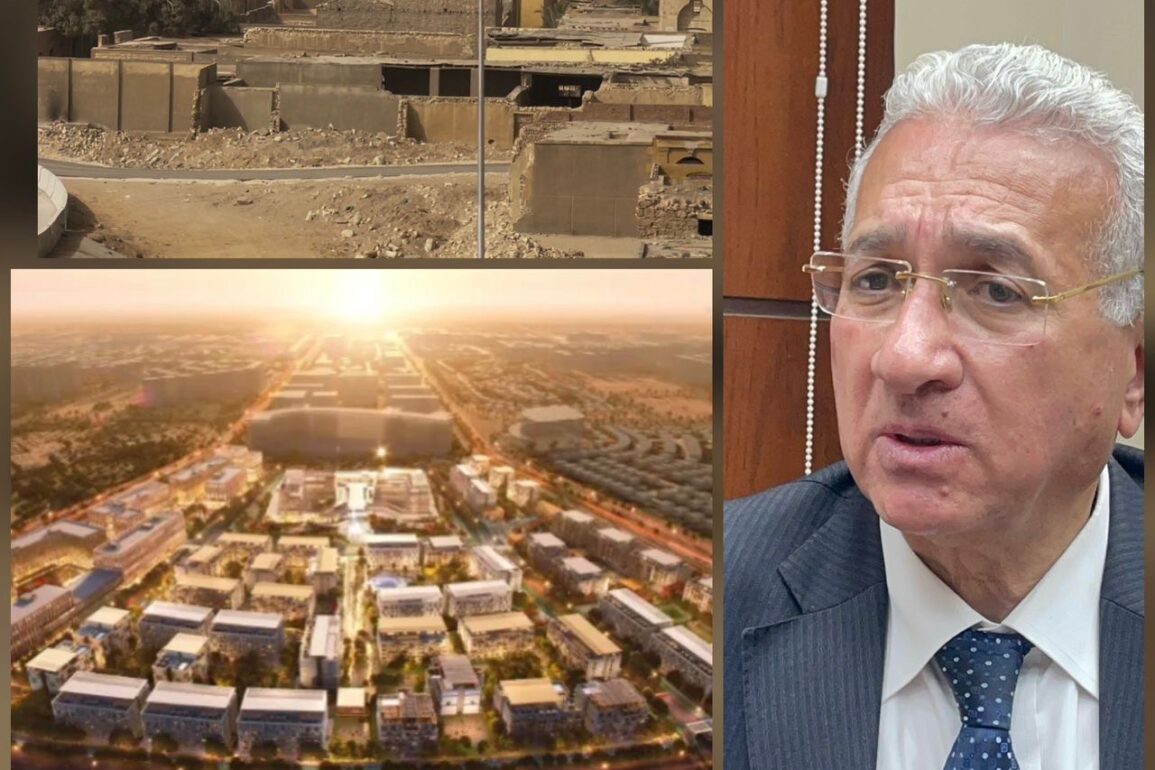
Across Africa, sprawling slums remain one of the continent’s most stubborn urban challenges.
Rapid population growth, weak planning, and limited resources have left millions living in overcrowded, unsafe settlements, often cut off from basic services.
Yet Egypt is showing that slum redevelopment does not have to mean conflict, displacement, or hardship. Instead, it can be a carefully managed process built on dialogue, dignity, and choice.
Egypt’s experience, spearheaded by the North Africa Regional Office (NARO), was the focus of a recent conversation between Tobinco Media Group’s Ebenezer Madugu and the Director of NARO, Ambassador Dr. Mohamed Higazy, on the sidelines of a visit by trainees of the 62nd UAJ session in Cairo.
The session was organized by the Union of African Journalists and the Supreme Council for Media Regulations.
According to Ambassador Higazy, slums are not just an Egyptian problem; they are a shared African reality. What matters most is how governments respond.
In Egypt’s case, authorities began by identifying life-threatening slum areas where intervention was unavoidable.
“The first duty of government is to protect its citizens,” he explained. But protection, he stressed, must go hand in hand with social understanding.
Rather than forcefully evicting residents, Egypt adopted a people-centered approach. Communities were engaged before any relocation took place, their needs assessed, and clear options presented.
Residents could choose financial compensation sufficient to start afresh elsewhere, move into newly built housing provided by the state, or even return to improved housing within the same area once redevelopment was completed.
During construction, temporary housing was also provided, ensuring families were not left stranded. This emphasis on choice and compensation reduced resistance and built trust.
Slum dwellers were not treated as obstacles to development but as partners in it. The result has been the transformation of dangerous informal settlements into modern, livable neighborhoods without widespread unrest.
Beyond housing, Egypt’s broader urban strategy offers further lessons. Faced with congestion, pollution, and housing shortages in Cairo, the government took the bold step of building a new city in the desert. Designed to accommodate about seven million people—roughly the size of Singapore—the new city acts as a magnet for population movement away from the overstretched capital.
Modern infrastructure, planned housing, and economic opportunities are drawing residents while easing pressure on old Cairo.
Crucially, this push for the new has not meant abandoning the old. Historic Cairo is being restored and preserved, with projects such as the Grand Egyptian Museum symbolizing a balance between heritage and modernity.
As Ambassador Higazy put it, development must move forward without erasing the past.
Egypt’s investments in infrastructure reinforce this model.
With about 7,000 kilometers of roads constructed, the country now ranks 19th globally in World infrastructure assessments.
Roads, Ambassador Higazy noted, are “the veins of geography,” enabling trade, connecting markets, and unlocking growth.
Similar thinking underpins Egypt’s engagement in major African projects, where shared expertise and locally executed works build long-term capacity.
For countries like Ghana and others across Africa, the message is clear. Slum redevelopment is not just a technical exercise; it is a social contract. When citizens are consulted, compensated fairly, and given real choices, urban renewal becomes smoother and more sustainable.
Egypt’s experience shows that African cities can modernize without tearing apart the communities that call them home.
Cairo|Ebenezer Madugu