

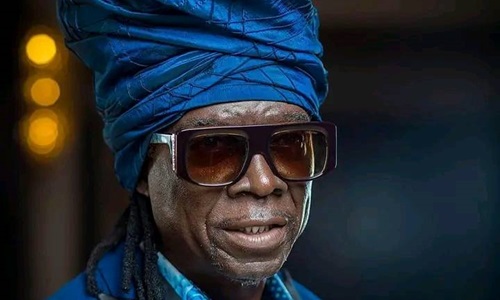
Legendary highlife icon Kojo Antwi, affectionately known as “Mr. Music Man,” has officially released his long-awaited memoir, Kojo Antwi: The Mr. Music Man, The Journey, marking a significant milestone in a project that has been 18 years in the making.
In a recent detailed conversation about the release, the Maestro revealed that this book is merely the first installment of a larger narrative, focusing primarily on his early life and personal experiences, with a second volume dedicated to his expansive musical career already on the horizon.
Although the book was physically printed two years ago, its debut at the Labadi Beach Hotel was delayed out of respect following the passing of his mother and his contemporary, Daddy Lumba. Antwi explained that his primary motivation for writing was the lack of documentation among African music legends; he felt a responsibility to record his path after witnessing so many giants of the industry pass away without sharing their written histories.
The memoir traces his evolution from his teenage years in Nima with Boom Talent to his time with bands like The Classica and The Handles, where he transitioned from a vocalist to a rhythm guitarist. Throughout the discussion, Antwi maintained his signature philosophical stance on his craft, refusing to pigeonhole his work into genres like reggae or salsa, instead describing his music as a “blessed gift” to his listeners.

He also offered a sharp critique of the modern music economy, noting that while the shift from cassettes and CDs to digital platforms has increased accessibility, it has left artists with meager compensation while third parties reap the rewards. He urged the younger generation of musicians to be more deliberate with their messaging and branding, reminding them that as the “voice of the people,” they must protect their rights and learn from the pioneers who came before them. Despite his decades in the industry, the “Music Man” continues to be praised for his legendary stamina—often performing for over four hours—and a humility that remains as steadfast as his influence on African music.